
ARC Development Mobile Luxury Living: Company Profile, Capabilities & Market Overview
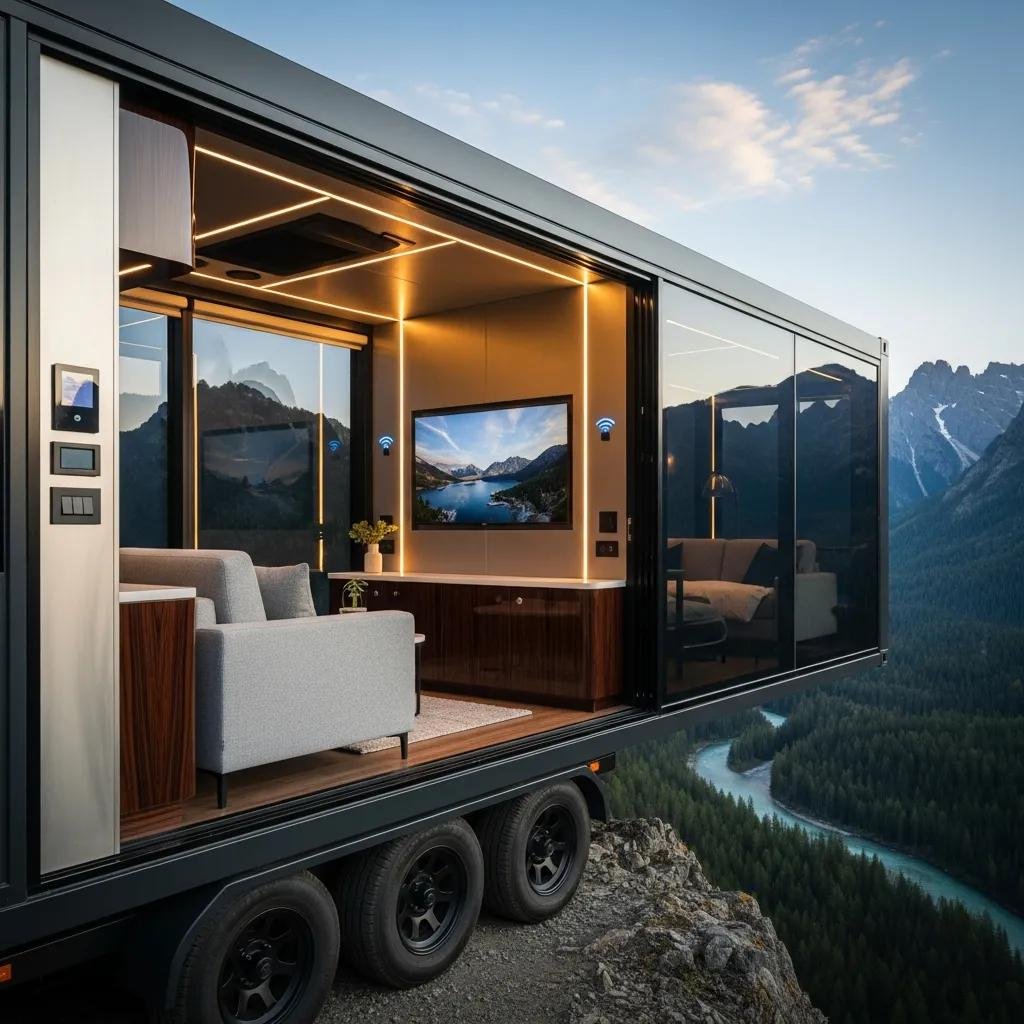
ARC Development is a mobile luxury living platform that reimagines real estate as a global network of modular container suites and automated vertical docking hubs. The platform couples relocatable modular housing with an integrated movement system and shared vertical Nodes to deliver mobility, resiliency, and network value to residents and investors. Readers will learn how ARC’s modular container suite technology, automated docking hubs, programmable living ecosystem, and market positioning come together to enable high-tech, relocatable luxury housing. The article addresses mechanisms, resident workflows, Node architecture, target audiences, and market trends while integrating the company’s founding mission and opportunities to join the Founder’s Series membership. By the end, you will understand how ARC Development’s approach to modular housing and smart infrastructure creates a programmable, disaster-resilient alternative to static real estate and why that matters for affluent adventurers, remote creatives, and investors.
What is ARC Development’s Vision for Mobile Luxury Living?
ARC Development’s vision centers on transforming static property into a dynamic networked platform where modular container suites plug into automated vertical docking hubs, enabling residences to relocate, upgrade, or reconfigure without demolition. This mechanism works by combining intermodal-ready container cores, programmable docking interfaces, and shared amenity Nodes to create mobility, resilience, and compound network effects across locations. The primary benefit is a living system that increases supply flexibility while preserving luxury design standards and connectivity to services, which reduces friction for residents seeking seasonal movement or safer relocation during crises. Understanding this vision requires unpacking the platform’s core value propositions and the pragmatic ways Nodes and suites interact across the network.
ARC Development emphasizes several core advantages that define its mobile luxury living model:
- Seamless Relocation: Suites can move between cities and plug into new vertical towers, preserving resident continuity and access to amenities.
- Programmable Living: Suites swap into open slots and towers evolve over time, enabling functional repurposing and resident-driven configurations.
- Disaster Resilience: Modular relocation reduces exposure to climate and geopolitical risks by enabling rapid movement to safer Nodes.
These benefits frame how ARC redefines ownership and access.
The following subsections explain the paradigm shift from fixed real estate and introduce the founding team that drives the mission toward scalable, networked living.
How does ARC Development redefine real estate with mobile living platforms?
ARC Development reframes real estate from a static asset into an interoperable component of a broader mobility network, shifting value from location permanence to platform flexibility. The mechanism relies on standardized interfaces and intermodal compatibility so container suites can undock, transport by road/rail/sea, and plug into new vertical Nodes quickly, which shortens lifecycle timelines and reduces construction waste. For residents, this means lifecycle choices such as seasonal moves or lifestyle changes no longer require long sales processes or demolition; the suite travels with its occupant and plugs into local infrastructure. This network effect also magnifies utility: each additional Node increases amenity access, interchangeability of uses, and the marketplace for suite swaps, making the system more valuable as it scales.
By contrasting traditional ownership with platform-based mobility, the model highlights new economic levers and resident freedoms. The next subsection profiles the founders and the mission forces that shaped ARC’s direction.
Who are the founders and what drives ARC’s mission?
ARC Development was founded in 2023 by Ian Abbott, Mauro Moro, and Dimitrios Kyranos, who combine design, technology, and systems thinking to create relocatable luxury residences. Their mission emphasizes freedom of movement, disaster resilience, and a programmable built environment that adapts to resident demand and technological innovation. This leadership team positions ARC as an information hub and lead-generation platform focused on building a scalable network where Nodes and suites increase collective value. For prospective buyers, investors, or enthusiasts who want early access to platform opportunities, ARC invites applications to its Founder’s Series membership to engage with the founding community and reserve priority placement in initial Nodes.
How Does ARC’s Modular Container Suite Technology Work?
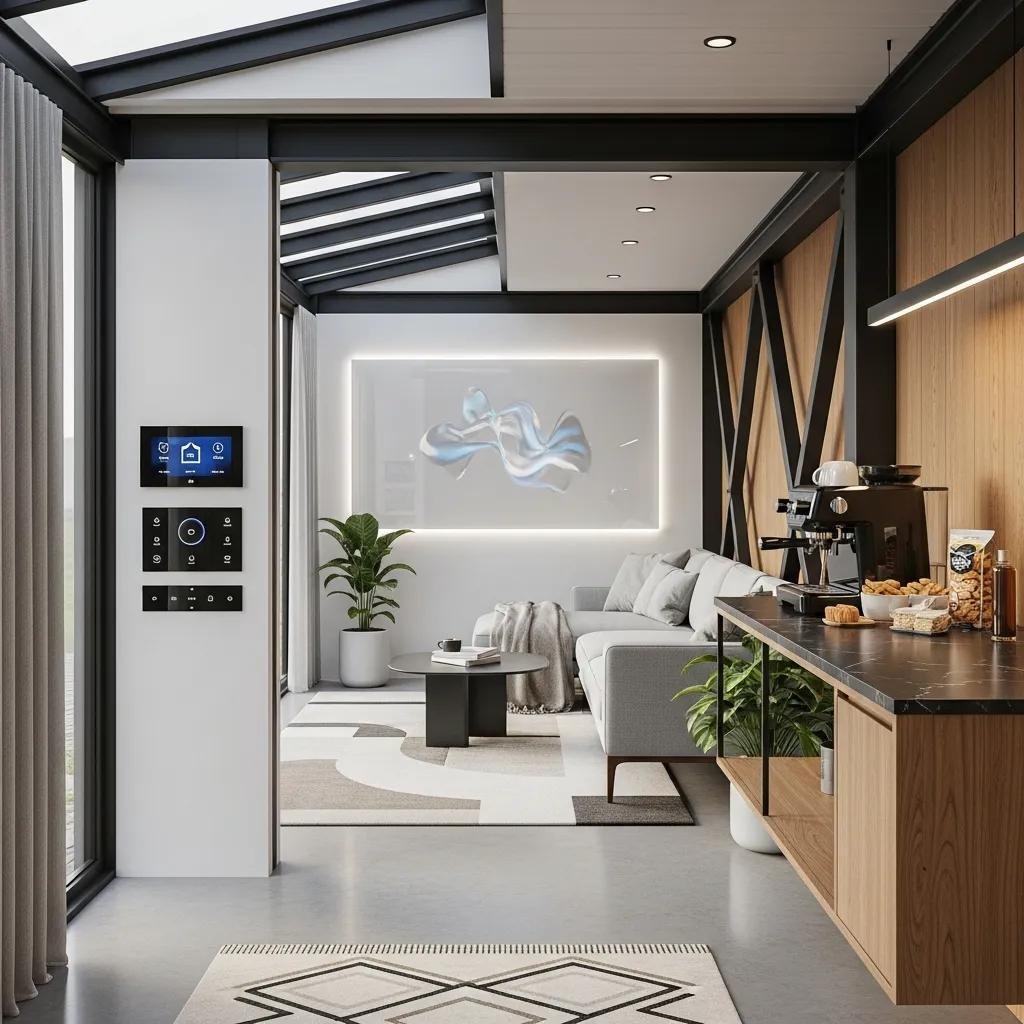
ARC’s modular container suites are engineered as self-contained, intermodal-ready units that combine a rigid modular core with expandable solarium elements and integrated smart systems. The mechanism uses a docking interface that supplies utilities, physical alignment, and software handshakes so a suite can connect to Node services with minimal manual configuration. The specific benefit is a high-end, relocatable living space that retains luxury finishes and full smart-home control while remaining transportable and upgradeable on demand. Understanding construction, systems integration, and relocation workflows explains why these suites are suitable for luxury living and rapid mobility.
Key high-tech components underpin suite performance:
- Intermodal Core: A standardized structural container designed for road, rail, and sea transport that ensures relocation readiness.
- Solarium Extension: Fold-out glass and shading systems that expand living area while preserving thermal control and views.
- Smart Home Integration: Embedded IoT telemetry for energy, climate, security, and lifecycle management.
These components work together so the suite remains comfortable during transport and reconnects seamlessly to Node utilities upon docking. Below is a focused comparison of typical Founder’s Series variants and how they map to use-cases, helping buyers and members understand available options.
| Suite Variant | Core Attributes | Ideal Use-Case |
|---|---|---|
| Founder’s Series – Residential | Luxury finishes, solarium extension, full smart-home telemetry | Primary home for affluent residents seeking mobility and privacy |
| Founder’s Series – Studio | Compact footprint, configurable workspace, energy-efficient systems | Remote creatives and technologists needing a mobile studio |
| Founder’s Series – Retail / Lab | Reinforced access points, connectivity ports, modular fixtures | Pop-up retail, cafes, or small labs that plug into commercial floors |
What features make ARC’s container suites high-tech and luxury?
ARC suites combine high-end interior materials with smart automation, providing a hospitality-grade experience in a relocatable footprint. Luxury finishes, configurable layouts, and integrated solarium extensions deliver natural light and premium views while minimizing thermal loss through engineered glazing and insulation. Smart home systems control energy, climate, lighting, and access, and IoT telemetry provides continuous monitoring for maintenance, security, and optimal energy management. These features create a seamless resident experience that mirrors fixed luxury homes while preserving the ability to relocate and upgrade, illustrating how high-tech design supports both comfort and mobility.
The convergence of materials and digital systems enables practical services like predictive maintenance and remote climate tuning. The subsequent subsection examines relocation workflows and resilience benefits tied to this technology.
How do modular suites enable seamless relocation and disaster resilience?
Relocation uses a standardized dock-and-transport sequence: the suite undocks, secures to intermodal carriers, moves via road/rail/sea, and re-docks at the destination Node where utilities and services auto-configure. This process is supported by bolted structural interfaces, automated alignment systems, and software orchestration that preserves resident data and preferences during transit. In disaster scenarios, residents can relocate within hours or days depending on logistics, shifting from at-risk Nodes to secure hubs and retaining living continuity. Intermodal compatibility and pre-established Node capacity make evacuations faster and reduce reliance on emergency shelter infrastructure.
This mobility translates into practical resilience: families and operations retain control over location choices rather than being bound to a single high-risk site. For potential early adopters, ARC makes Founder’s Series placements available to applicants who want prioritized access during initial rollouts.
What Are Automated Vertical Docking Hubs and ARC Nodes?
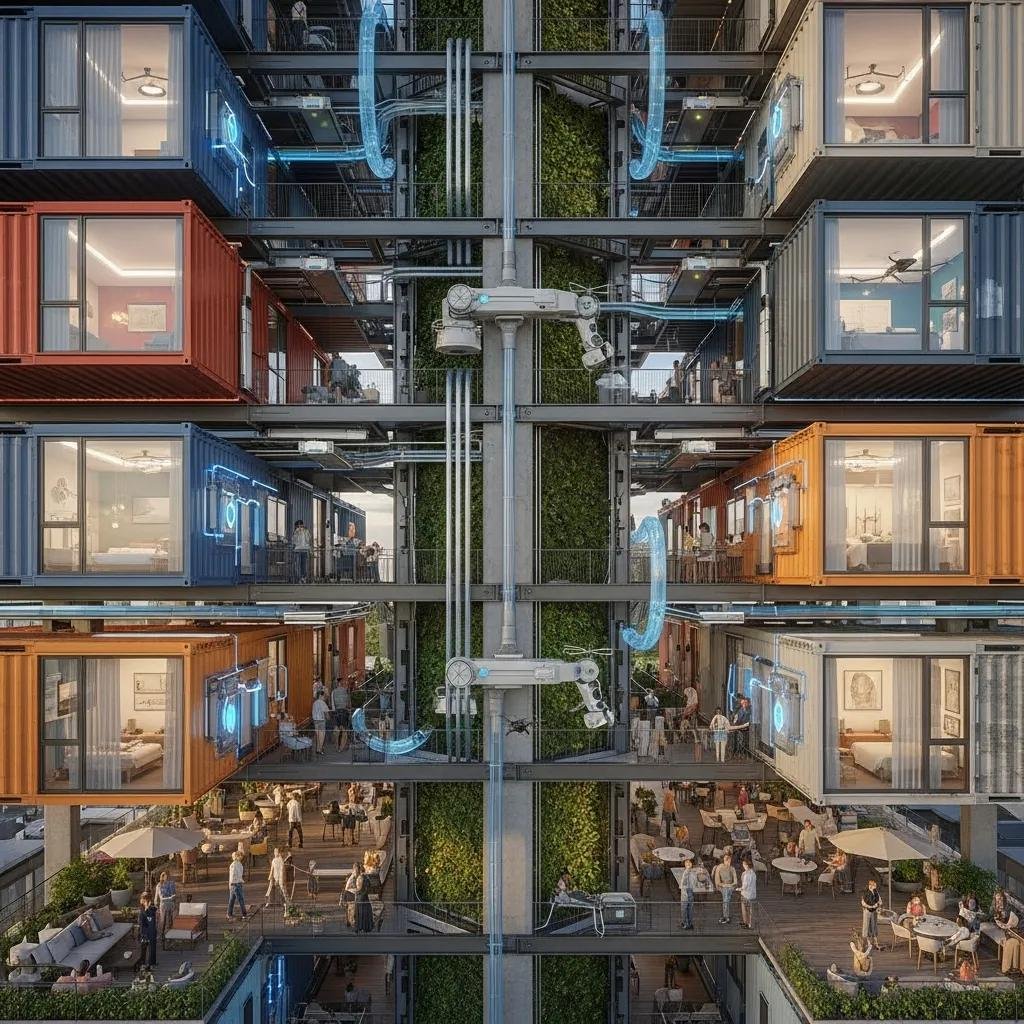
ARC Nodes are automated vertical docking hubs that host stacked docking bays, shared amenity floors, and integrated service systems to support plug-in suites and community life. Each Node uses a docking interface that supplies power, water, waste management, and digital services while providing alignment and locking mechanisms that secure suites during occupancy. The resident benefit includes immediate access to co-working, leisure, energy systems, and local transport connections, enabling suites to function as full residences without independent site infrastructure. Nodes thus act as local ecosystems that multiply the network value of every suite that docks there.
ARC Nodes provide predictable resident workflows and shared services that reduce per-suite overhead. The table below compares common Node types and their operational attributes.
| Node Type | Primary Capacity | Connectivity | Energy Systems |
|---|---|---|---|
| Urban Node | High-density docking, mixed-use amenity floors | Road, rail, local transit links | Grid-tied with battery storage and microgrid controls |
| Wilderness Node | Lower-density, resilient sheltering, nature-focused amenities | Road access, limited transport staging | Off-grid capable with renewables and storage |
| Logistics Hub | High throughput for relocations, staging yards | Road, rail, sea intermodal links | Robust backup power and on-site fueling/charging |
How do ARC Nodes facilitate seamless docking and community amenities?
Nodes use an automated docking interface that aligns, clamps, and connects a suite’s utility ports while digitally authenticating resident profiles and provisioning services. The docking process includes automatic physical alignment, secure mechanical latching, and software-driven utility handshakes that bring power, water, HVAC, and network services online within minutes. Shared amenity floors provide co-working, wellness, and social spaces that residents access via the Node’s platform, and on-site logistics teams support movement scheduling and maintenance. This integration reduces setup time for incoming suites and enhances resident experience through consolidated services and predictable access to amenities.
Efficient docking and amenity provisioning make Nodes attractive places to live and visit, driving higher utilization and enhanced network effects as more suites and members participate. Understanding where Nodes are located and how ARC plans expansion clarifies the rollout strategy.
Where are ARC Nodes located and what are expansion plans?
Current and planned Nodes follow a strategic mix of urban and remote placements to balance market demand, resilience, and lifestyle variety, with initial focus in North America and expansion envisioned globally. Example Node locations referenced in planning include Mountain Wilderness and High-Desert sites that demonstrate rural and scenic placements alongside urban deployments. Node selection criteria prioritize connectivity to transport networks, availability of utilities or renewable energy potential, and local demand drivers such as tourism or creative economies. As the Node network grows, each new Node increases access and functionality for residents while enhancing the value proposition for investors and founding members.
This geographic strategy creates a mosaic of living options that support mobility and lifestyle choice, and it establishes clear investment logic for partners seeking to scale Node capacity and network services. A brief investor-focused note follows to summarize scaling opportunities.
How Does the ARC Network Ecosystem Enhance Programmable Living?
Programmable living at ARC means residents and operators can reconfigure the built environment via software-driven marketplace mechanisms, suite swapping, and tower reconfiguration rather than through demolition or complex construction. The integrated movement system, Node orchestration, and suite-level telemetry create a platform where physical units and digital rights are managed together to enable functional repurposing. The key benefit is a living environment that evolves based on demand signals—towers can shift floors from residential to retail, studios can convert into labs, and occupants can swap suites to match new life stages. This ecosystem framing turns real estate into an adaptive service rather than a fixed product.
To illustrate programmable living in practice, consider the following examples:
- Suite Swapping: A resident trades a mountain studio for a coastal solarium suite for the season, enabled by the platform marketplace and Node scheduling.
- Tower Evolution: A tower’s lower floors convert from residential to retail during peak tourism months, then revert during off-season.
- Use-Case Conversion: A studio is reconfigured from creative workspace to pop-up retail through modular interior elements and Node approvals.
These examples show how software orchestration and marketplace governance enable physical transformations without traditional construction. The next subsection examines the integrated movement system that makes these scenarios operational.
What is the integrated movement system connecting ARC suites globally?
The integrated movement system coordinates scheduling, logistics, and transport across road, rail, and sea pathways while providing software orchestration for secure transit and tracking. It pairs intermodal transport partners with Node schedules and suite-level telemetry so moves are optimized for cost, time, and safety, using predictive planning and real-time status updates. Security and monitoring rely on IoT telemetry embedded in each suite to provide location, environmental, and integrity data throughout transit, ensuring continuity of resident services. This logistics orchestration is essential for reliable programmable living because it turns the physical act of moving into a predictable, managed service.
Software-driven scheduling and transparent telemetry make moves predictable and reduce downtime for residents, which supports higher resident satisfaction and marketplace liquidity. The following section explains governance and marketplace mechanisms that enable suite swapping and tower reconfiguration.
How does programmable living allow suite swapping and tower evolution?
Programmable living depends on marketplace and OS-level orchestration that matches supply and demand for suite availability, schedules moves, and enforces governance around swaps and conversions. Residents list availability or desired swaps through platform tools, which mediate logistics, utility provisioning, and any governance rules set by Node communities. Towers evolve as aggregated marketplace signals inform operators to repurpose floors or adjust amenity mixes; these changes are executed via modular interface adjustments rather than new construction. Resident controls, upgrade pathways, and transparent pricing mechanisms ensure swaps are consensual, auditable, and operationally feasible.
This marketplace-driven approach creates flexibility while preserving property standards and community governance, leading naturally into who benefits most from the platform and how stakeholders engage.
Who Benefits from ARC Development’s Mobile Luxury Living Platform?
ARC’s platform targets affluent adventurers, remote creatives, technologists, collectors, and luxury investors who value mobility, privacy, and high-end design combined with network access. The core beneficiary groups gain distinct advantages: lifestyle flexibility for seasonal movement, turnkey creative workspaces for remote production, resilient relocation options for safety-conscious residents, and diversification opportunities for investors through Node and Founder’s Series participation. Each audience benefits from the platform’s modular housing, automated docking hubs, and programmable living marketplace, which together reduce friction and enable new lifestyle or investment strategies.
Primary audience benefits can be summarized:
- Affluent Adventurers: Mobility with luxury amenities supports seasonal movement and access to varied Nodes.
- Remote Creatives & Technologists: Configurable studios and high-bandwidth Node services enable focused work anywhere in the network.
- Luxury Investors & Collectors: Founder’s Series opportunities and Node partnerships provide exposure to a growing platform economy.
These audience profiles highlight different value pathways and transition naturally into lifestyle reasons why users choose ARC and how investors participate.
Why do affluent adventurers and remote creatives choose ARC’s solutions?
Affluent adventurers select ARC for the freedom to follow seasons, curate travel experiences, and maintain consistent standard-of-living across locations through a relocatable suite that preserves personalization.
Remote creatives and technologists choose ARC for integrated workspace options, reliable network services in Nodes, and the ability to relocate projects rapidly without losing infrastructure.
Both segments benefit from high-end finishes, privacy controls, and amenity access that rival boutique hospitality while offering ownership or long-term tenancy models tied to platform mobility. These lifestyle advantages make ARC’s modular luxury homes attractive to users prioritizing experiences and operational continuity over fixed-location ownership.
What investment opportunities does ARC offer to luxury investors?
ARC offers investment pathways including early participation in the Founder’s Series, Node partnerships, and involvement in platform growth strategies that capture network effects and service revenue. The investment thesis centers on scale economics—each new Node and suite increases marketplace liquidity, amenity utilization, and potential platform fees tied to moves and services. While specific financial instruments and terms are available through investor materials, the strategic logic emphasizes scarcity reduction, programmable value creation, and exposure to automation and smart-infrastructure trends in modular housing. High-intent investors and partners are invited to request investor materials and explore Node partnership opportunities to evaluate alignment with portfolio objectives.
These investment options create multiple levers to participate in platform upside while supporting the network’s operational expansion. The final section examines market trends underpinning ARC’s opportunity.
What Are the Market Trends and Future Outlook for Modular Luxury Living?
The modular construction and smart housing markets are evolving rapidly through 2024 and beyond, driven by affordability pressures, speed-of-delivery demands, sustainability goals, and increasing smart-home adoption. Automation, IoT telemetry, and logistics orchestration are converging to make relocatable housing operationally feasible at scale, creating fertile ground for platforms that connect modular supply with networked infrastructure. For ARC Development, these trends validate the strategic focus on programmable living, automated docking, and Node expansion as foundational capabilities that meet contemporary demand for mobility and resilience in housing.
| Market Metric | Description | Current Status |
|---|---|---|
| Modular Construction Demand (2024) | Drivers include speed, cost containment, and sustainability | Growing due to construction constraints and affordability needs |
| Projected Automation Adoption | Increased use of automation for logistics and docking | Rising as warehouse and AGV technologies mature |
| Smart Home Penetration | IoT-enabled living for monitoring and control | Expanding across high-end and mid-market segments |
This mapping emphasizes the alignment between market dynamics and ARC’s technical and product roadmap. The following subsections expand on modular construction evolution and the role of smart technology in mobile housing.
How is the modular construction market evolving through 2033?
Modular construction is shifting from niche to mainstream as manufacturing efficiencies, standardization, and prefabrication reduce costs and accelerate delivery timelines. Key drivers include urban housing shortages, sustainability mandates that favor less wasteful building methods, and the need for rapid deployment in disaster response and seasonal markets. For a platform like ARC, modular growth provides supply-side advantages—more scalable production of intermodal-ready suites and lower per-unit cycle times—while enabling faster Node activation and market expansion. These trends suggest continuing opportunity for networked modular luxury living as production capacity and regulatory frameworks adapt.
These trends set the stage for how smart technology underpins operational feasibility.
What role does smart technology play in the future of mobile housing?
Smart technology is the operational backbone for mobile housing, enabling telemetry for transit security, predictive maintenance, energy optimization, and marketplace orchestration that supports programmable living. Automation technologies—ranging from automated alignment systems at docking hubs to IoT-enabled containers—allow suites to move reliably and connect to Node services with minimal manual intervention. Software orchestration manages scheduling, governance, and resident preferences, creating a seamless experience that ties physical mobility to digital service continuity. As these technologies mature, they reduce friction, lower operating costs, and unlock new service models that make relocatable, luxury modular homes viable at larger scale.
These technological advances close the loop between physical modularity and software-driven lifestyle control, reinforcing ARC Development’s strategic direction and the platform opportunities available to members and investors.